

The Most Dangerous Voice in Your House (and Office, and Church)
I’m delighted to have pastor, author and my friend Jonathan Hoover, Ph.D., back to share fascinating insights about the real problem facing “toxic” leaders. You’ll view them in an entirely new way. And whether you lead teams at work or kids at home, you’ll want to read every word of this guest blog (including to the end of the bio, which Jonathan wrote. I promise I wouldn’t do that to him.) Enjoy! – Shaunti
The Most Dangerous Voice in Your House (and Office, and Church)
You’ve met this person before.
Maybe she was your boss. Maybe he was a pastor you loved until you didn’t. Maybe—and this is a hard one—maybe they share your last name or worse, has been the face in the mirror.
They’re brilliant. Genuinely talented. The kind of person other people brag about knowing. And then one day, over something tiny—a piece of feedback, a side comment from a spouse—they just implode. The reaction is way out of scale. People around them start walking on eggshells, start covering for them. And they start believing they’re surrounded by enemies who don’t appreciate them.
If you’ve ever asked, “How can someone so smart act so small?” — congratulations, you’ve stumbled into one of the great mysteries of leadership. I wrote a whole book trying to crack it. The answer surprised me.
The diagnosis we got wrong
For about twenty years, the conventional wisdom on difficult leaders has been the same: they’re narcissists. Google “toxic boss” and you’ll drown in articles about the “dark triad” and how to spot the narcissist in the corner office.
One problem. That diagnosis doesn’t help anybody.
It doesn’t help the person on the receiving end, because “your boss is a narcissist” basically means: get out or grit your teeth. It doesn’t help the person who sees a few troubling patterns in themselves, because nobody wakes up, looks at the ceiling, and says, “You know what, I think I’m a narcissist.” And it certainly doesn’t help a young leader trying to avoid becoming one, because “don’t be a narcissist” is about as useful as “don’t be tall.”
Worse, the diagnosis may not even be accurate. When I started studying leaders carefully—Nixon, King Saul, a long list of pastors, CEOs, ministry founders—they didn’t look grandiose. They looked scared. Painfully shy. Convinced everyone was about to find out they didn’t really belong.
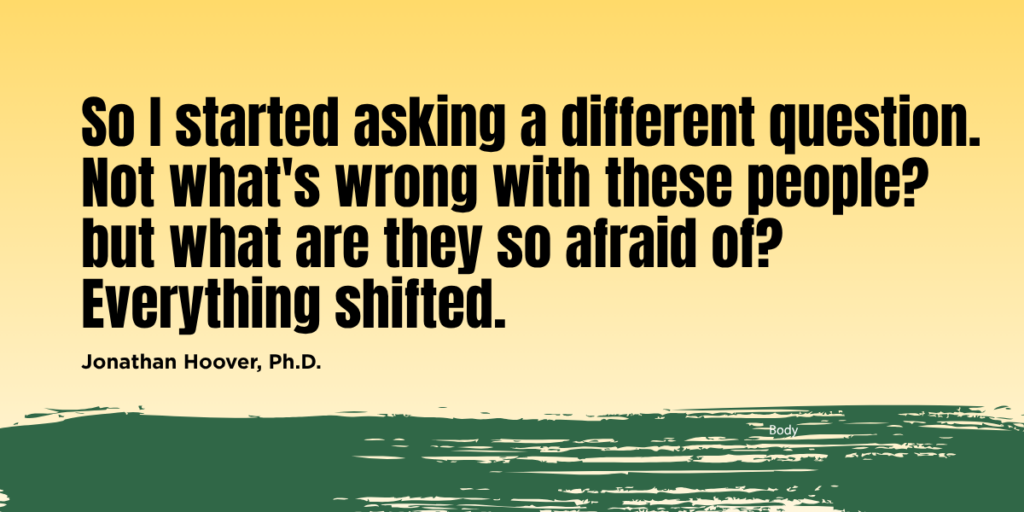
So I started asking a different question. Not what’s wrong with these people? but what are they so afraid of? Everything shifted.
The Critic in the spare bedroom
There’s a voice that lives in every human head. You know it. It’s the one that replays a dumb comment from twelve years ago at 2 a.m. It takes your wins and shrinks them. It whispers, “They’re going to find out you’re a fraud.”
I call it the Critic.
For most of us, the Critic is an unwelcome visitor. It shows up, makes a mess, eventually leaves. But for some people, it isn’t a visitor—it’s a roommate who never sleeps, never shuts up, and never offers a single word of encouragement.
Now imagine that critic-tormented person becomes a leader. Talented, driven, capable of real achievement. From the outside, they look like they have it all together. But inside, the Critic is keeping pace with every win, every promotion, every standing ovation. And it is not impressed.
This is the boss who can’t delegate (because the Critic says nobody can get close enough to see the truth). This is the wife who can’t say “I was wrong” (because the Critic has made an admission of fault feel literally unsurvivable). This is the pastor who can’t trust loyal people (because the Critic insists loyalty is a temporary illusion).
The damage these folks do is real. But the engine of it isn’t ego. It’s terror.
Why this matters at your kitchen table
I know, this is Shaunti’s blog. You came here for help with your marriage, your kids, your team at the church. So let me get specific.
The Critic doesn’t only show up behind impressive desks and in corner offices. It shows up at dinner. It’s the reason a basically good husband loses his mind when his wife gently mentions the credit card bill and the reason a basically good wife levels her husband over a comment about her cooking. It’s the reason a mom who loves her kids snaps with disproportionate fury when one of them makes a small mistake. It’s the reason any of us, in our most exposed moments, double down on a stance we secretly know is wrong—because backing down feels like dying.
If you’ve ever wondered why a calm conversation with someone you love suddenly turns into nuclear war over something small, the Critic was probably in the room. It was in their head, telling them this small thing was actually a referendum on whether they’re worth anything at all.
That’s not narcissism. That’s anxiety wearing armor.
The way out is smaller than you think
Here’s the hopeful news — and the reason I wrote the book.
The patterns can change. Not because of some magic productivity hack, but because there are ancient practices that disarm the Critic. The book builds toward four of them—Truth, Humility, Service, and Compassion. Scripture has been modeling them all along.
If I could give you only one to start with, it’d be this: practice saying “I was wrong” before anyone forces you to.
Sounds tiny. It is not tiny.
Every time you acknowledge a mistake voluntarily—to your spouse, your kid, your team—you’re teaching your nervous system a lesson the Critic does not want you to learn: truth is survivable. The world doesn’t end. Your marriage doesn’t collapse. People generally don’t think less of you; they think more.
King David, after the Bathsheba catastrophe, said five words King Saul could never get out of his mouth: “I have sinned against the Lord.” No hedging. No blaming Bathsheba for being beautiful or Uriah for being inconveniently loyal. Just truth, naked and undefended.
David got to keep going. Saul didn’t.
Before you assume there’s no toxicity in your own leadership…
Almost all of us, on at least a small scale, have a Critic in the spare bedroom in our mind. And almost all of us have moments where we let it drive.
The point of all this isn’t to add one more thing to feel bad about. The point is the opposite: to name something that’s been operating in the dark, and to notice that once you can see it, you can start choosing differently.
The Critic gets quieter when you stop feeding it.
You can start tonight.
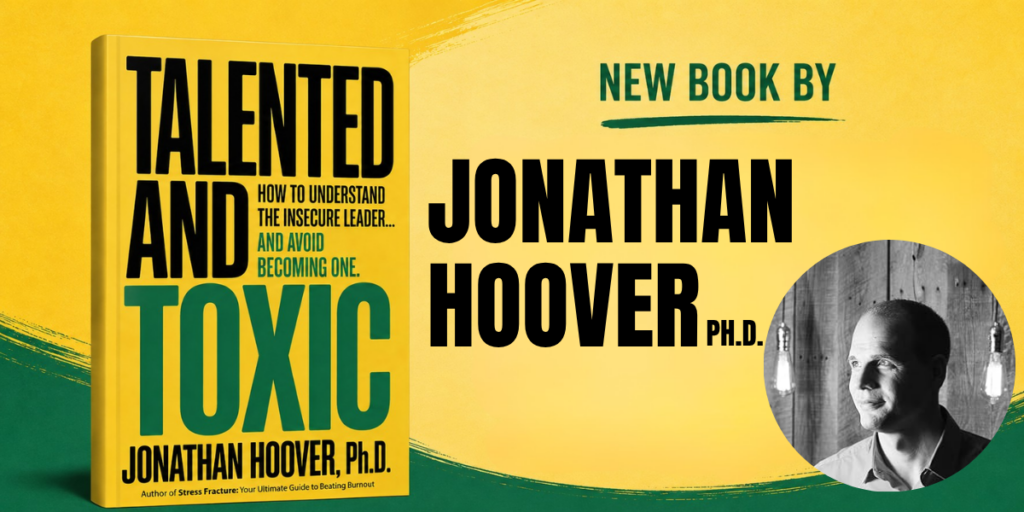
Jonathan Hoover, Ph.D. is the author of the newly released book Talented and Toxic: How to Understand Toxic Leaders … and Avoid Becoming One. He’s been a friend of Shaunti’s since he was young, thin, and hadn’t yet gone completely bald—so, a long time.
If you are interested in having Shaunti bring research-based strategies, practical wisdom and biblical principles to your next event, please contact Amy Masaschi at [email protected]/.
On our podcast, I Wish You Could Hear This, Jeff and I offer proven steps to help you thrive in your life, faith and relationships. In other words, we’ll offer the practical help you’ve grown accustomed to right here in this blog space. You’ll take away specific steps that help you today. Listen, follow, and share with your friends on YouTube, Apple Podcasts, Spotify and other platforms.
Please note: This post may contain affiliate links. As an Amazon Associate we earn a small amount from qualifying purchases through these affiliate links. This doesn’t cost you anything, and helps us continue bringing you great content!
More from Shaunti’s Blog:
Could Venting Your Anger Actually Be Making It Worse?
Sometimes the worst thing you can do when you’re angry is talk about it. You probably just did a double…What Does Love Look Like When Life Is Wearing You Down?
This is the final part of a four-part blog series about loving people well in marriage, parenting, friendship, or any…How Do You Love Someone Who Is Losing Hope?
This is part three of a four-part blog series about loving people well in marriage, parenting, friendship, or any other…