
How to Believe the Best of Someone You Strongly Disagree With (Part 3)
This is part three of a three-part series on how to believe the best of those we disagree with—especially politically. See part one here, and part two here.
*
Have you ever said or thought a statement like these?
“I wish our culture wasn’t so divided!”
“Man, I wish people weren’t so mean about politics these days!”
“I’m glad the election is over…but I’m already dreading what it’s going to be like in two years for the presidential election.”
Yeah? Me, too!
And guess what? We all have a role to play in changing the division, reducing the meanness, and calling one another to a different approach to election season. But it starts with something we may not have realized we needed to do: Believing the best of those we might vehemently disagree with. Yes, even that difficult neighbor who keeps campaigning for a zoning change that will hurt your small business, or the fellow school parent who is vocally pushing for state policies that you find extreme and damaging.
We are covering eight key steps to reaching the “believe the best” goal. We talked about the first four steps in parts one and two. (If you missed them, I’d encourage you to go back and read them—including one important caveat.)
In this final part, we are going to cover the last four practical steps. This includes a challenge that might not come naturally but is vital to rebuilding the culture of civility and kindness that we all say we want—not just in politics, but in our relationships with anyone with whom we disagree.
Step #5: Put yourself in the other person’s shoes
As we emphasized in part two, one of the biggest traps is the temptation to believe the worst of the other person’s motivations and character. We subconsciously think that the fellow school parent who vocally advocates for those damaging state policies must be uninformed or deceived—or maybe even just a destructive, selfish person. But most of the time, the truth is that the other person is sincerely advocating for something that they think will be the most caring and beneficial approach—just like we are.
The way around the logjam starts with empathy. We must put ourselves in the other person’s shoes, which will help us understand why they have the views they do. This can mean anything from asking them sincere questions and listening to proactively doing an empathy exercise.
I remember one startling assignment from a class in my Master’s in Public Policy program. Before a class debate on a particularly emotional, hot-button policy topic, we were told to convincingly write a paper advocating for the opposite view to our own. In order to do so, I found (as the professor no doubt intended) that I had to actively put myself in the minds of those who believed that view and deeply understand where they were coming from.
Putting ourselves in the other person’s shoes is an essential skill toward believing the best of those with whom we disagree.
But it doesn’t stop there.
Step #6: Look for something in the other person that you can genuinely appreciate
The next step is to not just empathize but to find something you can genuinely appreciate in the other person.
I’m thinking of someone in my life who holds very different views than I do about a certain group of people. Even though we disagree strongly on this issue, I try to remind myself of how loving and kind this person is whenever I have interacted with them. I watch carefully, and I see consistent evidence of their heart for the vulnerable among us—and that they view the people group in question as more vulnerable. So I quickly realize: this person’s strongly held viewpoints stem directly from compassion, not bias!
I still think this person is wrong—and that their beliefs have serious negative consequences. But I can now listen to them talk about it, or look at their posts on social media, with empathy and a belief in their positive intentions instead of with anger. And both are vital stepping stones toward loving them well.
Step #7. Talk kindly about people you disagree with
This is one of the simplest yet most unrecognized ways to change our minds and hearts about others that we find challenging: talk kindly about them.
In all of our research over the last two decades, one of our most compelling findings is the astounding power of kindness to change not just a relationship but ourselves. We created and tested an initiative called The 30-Day Kindness Challenge that anyone can do to create a better relationship with someone in their life.
One of the three daily practices is to say nothing negative about the person you’re focusing on, either to them or about them. When I first went through this Challenge for my teenage daughter years ago, I thought it would be the easiest of the three steps for me. After all, I wasn’t negative!
Oh, how wrong I was. Resisting the urge to respond negatively in the moment (or later on when the person is no longer around) is way more challenging than we might realize.
Maybe you’ve recently found yourself staying polite in a political conversation, but later you made a sarcastic comment about the person to your spouse. Or maybe you saw a social media post that frustrated you, and you felt the urge to leave a snarky, argumentative response.
Those are common temptations, but they’re also far more damaging to your mind and heart than you realize. Yet they are also vital opportunities to practice being kind in our speech. Our words matter immensely, even when the other person isn’t there to hear them. Proverbs 18:21 is blunt: “Life and death are in the power of the tongue.”
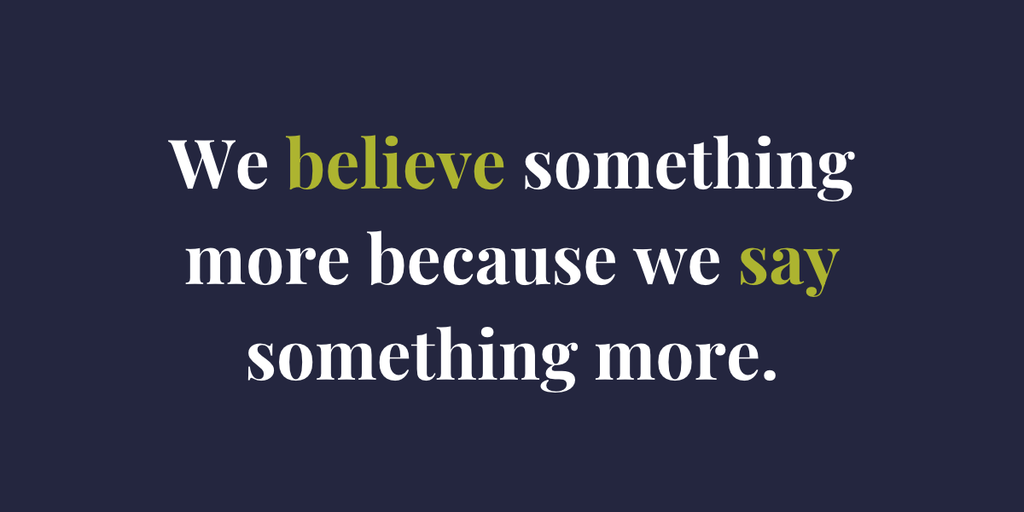
Every time we say something—positive or negative—neuroscience makes it clear that we are building deeper neural pathways in our brain. We believe something more because we say something more. If we want to change our entire outlook about those on the “other side,” the secret sauce isn’t just internally empathizing or appreciating them—but saying so out loud.
If we take the weight of this truth to heart—deliberately avoiding negative speech and purposefully stating the positive—this practice will be transformative for our relationships with those who hold opposite views.
(And by the way, we recently launched a campaign to save the 30-Day Kindness Challenge system, which is ten years old and keeps breaking! If you have been impacted by the Challenge and want to help us save it, we would LOVE your charitable donation HERE.)
Step #8: Don’t catastrophize.
Our final step is a simple but profound challenge for many of us.
A few days before election day this year, one of the many texts that came to my phone opened with the line: “Our nation is at stake.” I might agree that our nation is at stake, but not in the way this particular candidate meant. Because I ultimately think that far more than any one policy or direction, the HEART of our nation is surely at stake.
When we catastrophize, we say, “If such and such happens, it will be a catastrophe!” And I’m not arguing that certain things could indeed be deeply concerning.
But when we think our nation is on the verge of collapsing, or that something could be catastrophic, we blind ourselves to a far bigger calamity: that in confronting that problem we may give ourselves permission to be remarkably unkind.
We may give ourselves permission to see those who disagree with us as evil.
We may give ourselves permission to be the opposite of loving.
And I view that as the greatest catastrophe of all.
We can do all the other steps I’m advocating for in this series and sabotage it all by catastrophizing. Or we can go all the way back to the clarion call Jesus gives us in Luke 6, that I mentioned in part one:
“If you love only those who love you, why should you get credit for that? Even sinners love those who love them! And if you do good only to those who do good to you, why should you get credit? Even sinners do that much! … Love your enemies! Do good to them. …for [God] is kind to those who are unthankful and wicked. You must be compassionate, just as your Father is compassionate.” (Luke 6:32-36, NLT)
If we are going to be compassionate and kind to those with whom we disagree, we are going to have to build a practice of believing the best of their intentions. So whether your preferred candidates have won or lost in this election cycle, whether you’re encouraged or worried about the future, I hope you’ll consider this challenge: choose one person you disagree with and make a deliberate effort to believe the best of them and treat them with kindness. Then begin to do the same with all those who believe as they do. Because long after the votes have been counted, those relationships will still matter. And so will the way we’ve treated one another.
*
If you want to see our culture become more kind, please help us save The Kindness Challenge! Your donation is tax-deductible and will help us continue an effort that is vital to our culture.
If you are interested in having Shaunti bring research-based strategies, practical wisdom and biblical principles to your next event, please contact Amy Masaschi at [email protected]/.
On our podcast, I Wish You Could Hear This, Jeff and I offer proven steps to help you thrive in your life, faith and relationships. In other words, we’ll offer the practical help you’ve grown accustomed to right here in this blog space. You’ll take away specific steps that help you today. Listen, follow, and share with your friends on YouTube, Apple Podcasts, Spotify and other platforms.
Please note: This post may contain affiliate links. As an Amazon Associate we earn a small amount from qualifying purchases through these affiliate links. This doesn’t cost you anything, and helps us continue bringing you great content!
More from Shaunti’s Blog:
How to Believe the Best of Someone You Strongly Disagree With (Part 2)
This is part two of a three-part series on how to believe the best of those we disagree with—especially politically…How to believe the best of someone you strongly disagree with (part 1)
Today is Election Day. And while it may not be a presidential election year, I think we can all agree…Could Venting Your Anger Actually Be Making It Worse?
Sometimes the worst thing you can do when you’re angry is talk about it. You probably just did a double…