
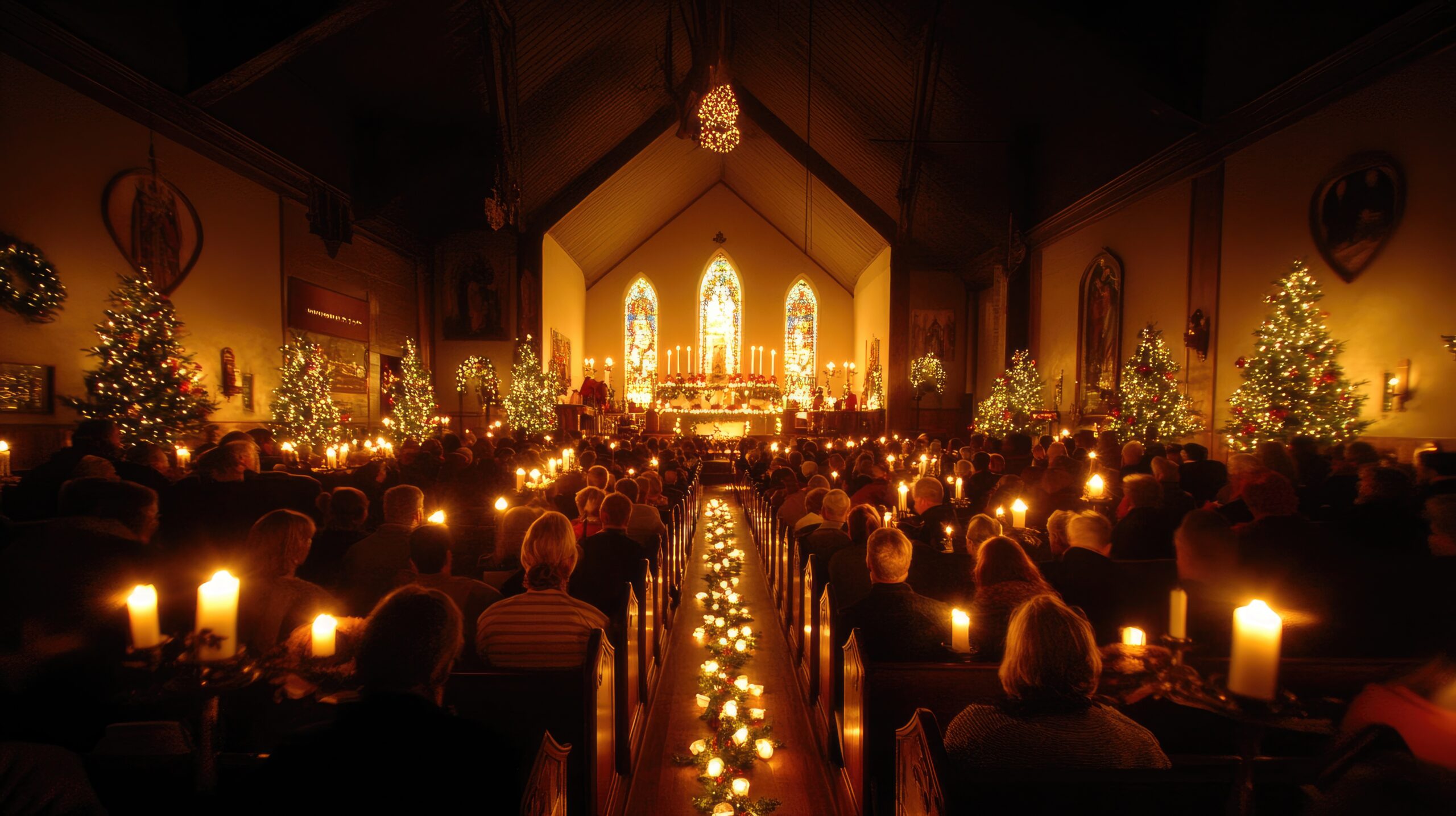
When Visitors Flood Churches This Christmas, Let’s Get Ready to Care
One of the most encouraging research interviews I’ve conducted in recent years was a phone conversation with Carey Nieuwhof. I explained that I was seeking the perspective of Christian leaders for an upcoming book and initiative to equip the church to become a key solution to the mental health crisis.
Carey is one of the most respected Christian leaders in the world (for context, his podcast has reached more than 37 million people), and his work is targeted directly at church leaders. So, it was incredibly encouraging to hear him say that what we were doing was so needed. It was even more encouraging that he eventually wrote the Foreword to the book, When Hurting People Come to Church: How People of Faith Can Help Solve the Mental Health Crisis.
But what I found most striking was why he thought our vision was so needed: Most churches don’t have a system in the church to help all the people who need it—which not only means lots of people aren’t receiving care and hope, but it also means lots of churches are not growing. Why? Because they are limited to the capacity of the pastor to directly serve the congregants one-on-one.
In a moment, I’ll share what Carey said about this more specifically. But let’s zoom out first.
You might be wondering why I’m talking about a church-leadership topic in a blog usually focused on equipping individuals to thrive in their lives and relationships. Well, first, a large minority of our readers are actually Christian leaders—pastors, counselors, women’s ministry leaders, and so on. And these leaders are often drowning in unmet needs. But mostly, this topic is important to cover because Christmas season is right around the corner—and so are many new people who might be checking out your church over the next few weeks.
Which means the people “out there” who we hope to reach with Jesus’ love are going to be right in front of us. What a remarkable opportunity to see our churches grow and become the place where people receive hope and healing.
So, it turns out today’s blog isn’t aimed just at leaders. It’s meant for you. If you’d like to see your church be a place where holiday visitors are loved by Jesus because they’re loved by you, here are a few points to recognize—and steps to take.
1. Recognize that new people WANT to come to church at Christmas.
It is easier to invite friends, coworkers or neighbors to church when we recognize they may want to attend for Christmas.
According to a Lifeway Research study from last year, 47% of Americans who planned to attend church on Christmas, 16% were observing tradition, 15% wanted to be with family and friends, and 8% thought it would get them in the Christmas spirit (interestingly this last number spiked to 21% for the religiously unaffiliated).
Even more compelling was the Lifeway finding that 57% of non-attendees said they would go to church on Christmas if someone they knew invited them.
So, interestingly, those who don’t otherwise attend church are often open to it for reasons other than celebrating Jesus’ birth. But they walk in the doors all the same. And, like all of us, they walk in with a host of needs—needs that Jesus can meet. Which brings us to point number 2.
2. Examine whether your church is set up to help Christmas visitors in the ways they need most.
Is your church ready to help visitors who bring loneliness, unhealed hurts, broken marriages, or parenting distress through your doors this Christmas? Put another way, are you—and the people next to you—ready to help? To love like Jesus loved? To sacrifice time the way He did? To serve others through intentional listening, helping, and more “official” systems such as lay counseling?
Our instinctive default is often to leave this level of care to the pastors and church staff. And this makes it very hard for our churches to grow.
Carey Nieuwhof told us (and we ended up quoting him in the book) that, “The number one reason most churches never make it past two hundred people is because they don’t know how to scale pastoral care.”
The pattern is usually that someone calls the church with a problem (a marriage concern, financial need, the anxiety of a child gone astray…) and the pastor’s assistant tries to get them on the pastor’s schedule. The problem is that the pastor also has to prepare a sermon, conduct a funeral service, figure out how to keep the lights on, arbitrate the dispute between the children’s director and the youth director, do pre-marital counseling for the young couple getting married next month—and a dozen other things. So, the person in need gets scheduled for a couple weeks out (the first available appointment). The pastor will then listen, provide pastoral counsel, see the person maybe once more, and then likely refer them to a counselor—who ALSO has a wait list.
This is not sustainable! And it’s also sending hurting people away from the church.
Now, don’t get me wrong: referring out is very important for complex issues. But we should also be planning to care for that person in the church. Which means it cannot be just the pastor; it also has to be the rest of us!
“Many pastors see counseling, relationship building, and pastoral care for the church and community as something that fuels them,” Nieuwhof told us. “They may not initially want to release some of that to others— but they become willing to do so because they have too many appointments. The issue is that they often don’t have a system to make delegation happen … So having a system to do that is essential for the church to reach its potential.”
When Hurting People Come to Church offers a model for just such a system.
3. Help the church seize its opportunity to share the Hope of the gospel with those who need it!
People may come to church at Christmas for family or familiarity. But what if in the process they encountered a church ready to help them in their current need? What if your church had a system of care that helped dozens or hundreds without burning your pastors out?
What if your church had a mental health strategy?
Of course, your church leadership must be the ones to approve and bless such a care system. This could involve a lay counseling, listening, or mentoring ministry. It could include recovery and support groups, such as Celebrate Recovery and GriefShare. It could involve the care strategies we outline in our book.
Gen Z, by the way, may be instinctively driving leaders to this conclusion. Statistics show Gen Z (born between 1997 and 2012) are more likely to seek out churches equipped to address mental health needs. A Missional Marketing survey found that 73.6% of non-churchgoing Gen Zers are looking for churches that address mental health. In fact, mental health ranked higher in their interest level related to church and Christianity than did friendship/loneliness, relationship/dating/marriage, and sex.
4. Capture a vision that we are the church.
When I was in grad school in Massachusetts, my pastor led services in a campus building and worked out of a separate office. One day a state tax assessor showed up to that office for a snap inspection. The assessor asked suspiciously: “Where’s the church?”
Honestly puzzled, my pastor answered: “Well, some of them are at work, some of them are at school …”
In other words, he was describing the church in the same way that will be helpful for us to think about it. The church isn’t a building: It’s us.
If you’re reading all this and thinking a full-blown mental health ministry will not be in place by Christmas, of course it won’t! And that’s okay. The early church built the plane while they were flying it, too.
If you’re mercy- or shepherding-minded and you believe your church has an opportunity to help families in distress, marriages in trouble, or people living with fear, bad habits, or grief, read When Hurting People Come to Church, then go to your pastor and say, “I want to help start this.” See what they say.
As Nieuwhof put it in a blog post: “Early Christians didn’t attend church. They were the church.” This is our moment to return to this idea. It’s not just the job of pastors and church staff to care for people. It’s ours. And Christmas is a season where those people come to us.
Let’s carry each other’s burdens and in this way fulfill the law of Christ (Gal. 6:2). Let’s get ready to care for Christmas (And Easter, and Mother’s Day) visitors in the ways they need most.
If you are interested in having Shaunti bring research-based strategies, practical wisdom and biblical principles to your next event, please contact Nicole Owens at [email protected].
On our podcast, I Wish You Could Hear This, Jeff and I offer proven steps to help you thrive in your life, faith and relationships. In other words, we’ll offer the practical help you’ve grown accustomed to right here in this blog space. You’ll take away specific steps that help you today. Listen, follow, and share with your friends on YouTube, Apple Podcasts, Spotify and other platforms.
Please note: This post may contain affiliate links. As an Amazon Associate we earn a small amount from qualifying purchases through these affiliate links. This doesn’t cost you anything, and helps us continue bringing you great content!
More from Shaunti’s Blog:
Bring Our Best, and Let Him Do the Rest
A few weeks ago, I wrote that we can be busy but we don’t have to be stressed. I stand…4 Ways to Practice Kindness Every Day
Imagine you and I are sipping coffee, just chatting away, when all of a sudden I ask you, “Do you…Glimpses of, and Gratitude for our Daughter’s Wedding Day
We knew our daughter’s wedding would be a bit of a whirlwind. One of our friends who had walked this…